What Happens Before Asbestos Abatement Starts? The Asbestos Abatement Process in Southern California

Before asbestos removal begins, there is an important process that happens behind the scenes. A safe asbestos abatement project does not start with workers removing material. It starts with testing, report review, planning, scheduling, containment preparation, and safety controls.
For property owners, contractors, facility managers, school districts, commercial property managers, homeowners, and tenants, understanding the asbestos abatement process in Southern California can help you know what to expect before work begins.
At Inland Contractors, Inc., we help clients throughout Los Angeles, the Inland Empire, Orange County, Riverside County, San Bernardino County, and surrounding Southern California areas prepare for asbestos abatement projects the right way.
Whether you are planning a renovation, demolition, tenant improvement, flooring removal, ceiling removal, pipe insulation removal, or cleanup after damaged materials, the steps before abatement are just as important as the removal itself.

Why the Asbestos Abatement Process In Southern California, Be
fore Asbestos Abatement Matters
Asbestos-containing materials can become dangerous when they are disturbed, damaged, cut, scraped, sanded, drilled, demolished, or improperly removed. Once disturbed, asbestos fibers can become airborne and spread through dust and debris.
That is why asbestos abatement is not treated like normal construction cleanup.
Before any asbestos-containing material is removed, the project needs to be reviewed, planned, and prepared. This helps confirm:
What material tested positive for asbestos
Where the asbestos-containing materials are located
How much material is affected
What areas need to be protected
What safety controls may be needed
Whether containment is required
Whether notifications or permits may apply
How the waste will be handled
How the work will be scheduled
What the customer should expect before, during, and after the project
A professional asbestos abatement process helps keep the project organized, safer, and compliant with the required scope of work.

Step 1: Review the Asbestos Survey or Testing Report
Most asbestos abatement projects begin with an asbestos survey, asbestos testing report, bulk sample report, or consultant report.
This report helps identify whether building materials contain asbestos and where those materials are located.
Common materials that may be tested include:
Floor tile
Black mastic or flooring adhesive
Popcorn ceiling texture
Drywall and joint compound
Pipe insulation
Duct insulation
Roofing materials
Fireproofing
Stucco
Plaster
Ceiling tiles
Window glazing
HVAC materials
Transite panels
Cove base adhesive
Vapor barriers
Debris from damaged building materials
The survey or testing report helps determine the scope of the project. Without proper testing, it is difficult to know what materials need to be handled as asbestos-containing materials.
Inland Contractors, Inc. does not perform asbestos testing or write asbestos consultant reports. Testing, surveys, and clearance reports are handled by third-party certified consultants or qualified testing companies.
Once the report is available, Inland Contractors can review the documented materials and prepare a proposal for the abatement work.
Why Testing Comes Before Removal
Many people search for things like:
Do I need asbestos testing before demolition?
Can I remove asbestos without testing?
Who tests for asbestos before renovation?
What happens if asbestos is found?
Do I need an asbestos report before removal?
Can a contractor remove asbestos without a survey?
The safest answer is that suspect materials should be properly tested before they are disturbed.
Testing helps protect the property owner, contractor, occupants, workers, and the overall project. It also helps prevent accidental disturbance of asbestos-containing materials during renovation or demolition.
If you are planning work in an older building, especially in Southern California, it is smart to have suspect materials tested before demolition or renovation begins.

Step 2: Build the Scope of Work
After the survey report is reviewed, the next step is to build the scope of work.
The scope of work explains what materials are being removed, where they are located, and how the project will be approached.
The scope may include:
The type of asbestos-containing material
The square footage, linear footage, or quantity
The rooms, units, floors, or areas affected
The condition of the material
Whether the material is damaged or intact
Whether the material is friable or non-friable
Whether the work area needs containment
Whether negative air machines may be used
Whether a decontamination area may be needed
Waste packaging and disposal requirements
Work schedule expectations
Site access requirements
Coordination with other contractors
Clearance or inspection requirements when applicable
This is the stage where the project starts to become clear. The report tells us what was found. The scope of work tells us what needs to be done.
Common Asbestos Abatement Projects in Southern California
Inland Contractors works with a variety of asbestos abatement projects across Southern California, including:
Residential asbestos removal
Commercial asbestos abatement
Industrial asbestos abatement
School asbestos abatement
Apartment and multi-family abatement
Office building asbestos removal
Retail tenant improvement abatement
Pre-demolition asbestos abatement
Floor tile and mastic removal
Popcorn ceiling asbestos removal
Pipe insulation asbestos removal
Drywall asbestos abatement
Roofing asbestos removal
Fireproofing asbestos removal
Damaged asbestos cleanup
Procedure 5 asbestos cleanup when required
Emergency asbestos abatement support
Asbestos debris cleanup
Containment setup for asbestos work areas
Every project is different, which is why reviewing the report and building a clear scope of work is such an important part of the asbestos abatement process.

Step 3: Plan and Prepare the Job
Once the scope of work is built, the project can be planned and prepared.
This step may include coordination with:
Property owners
General contractors
Facility managers
Tenants
Building engineers
School staff
Property management companies
Insurance representatives
Certified asbestos consultants
Air monitoring professionals
Other trades working on the project
Planning helps answer important questions before workers arrive on site.
These questions may include:
When can the work begin?
What are the approved work hours?
Is the building occupied?
Will tenants or employees need to be relocated?
Where can workers access the work area?
Where will equipment be staged?
Where will waste be stored before disposal?
Does the project require notification?
Does the project require air monitoring or clearance?
Are there security, parking, elevator, or access restrictions?
Will other contractors be working nearby?
Are utilities, HVAC, or fire alarm systems affected?
Are there special building rules or site requirements?
Planning helps reduce delays and confusion once abatement begins.
Required Notifications and Regulatory Planning
Some asbestos abatement projects may require notifications before work begins, depending on the location, amount of material, type of work, and applicable regulations.
In much of Southern California, including areas under South Coast AQMD jurisdiction, Rule 1403 may apply to demolition, renovation, asbestos removal, and cleanup of disturbed asbestos-containing materials.
Depending on the project, notification requirements may apply before abatement starts. This is one reason it is important to review the report and project scope early.
The exact requirements depend on the project, so property owners and contractors should work with qualified professionals to confirm what applies.
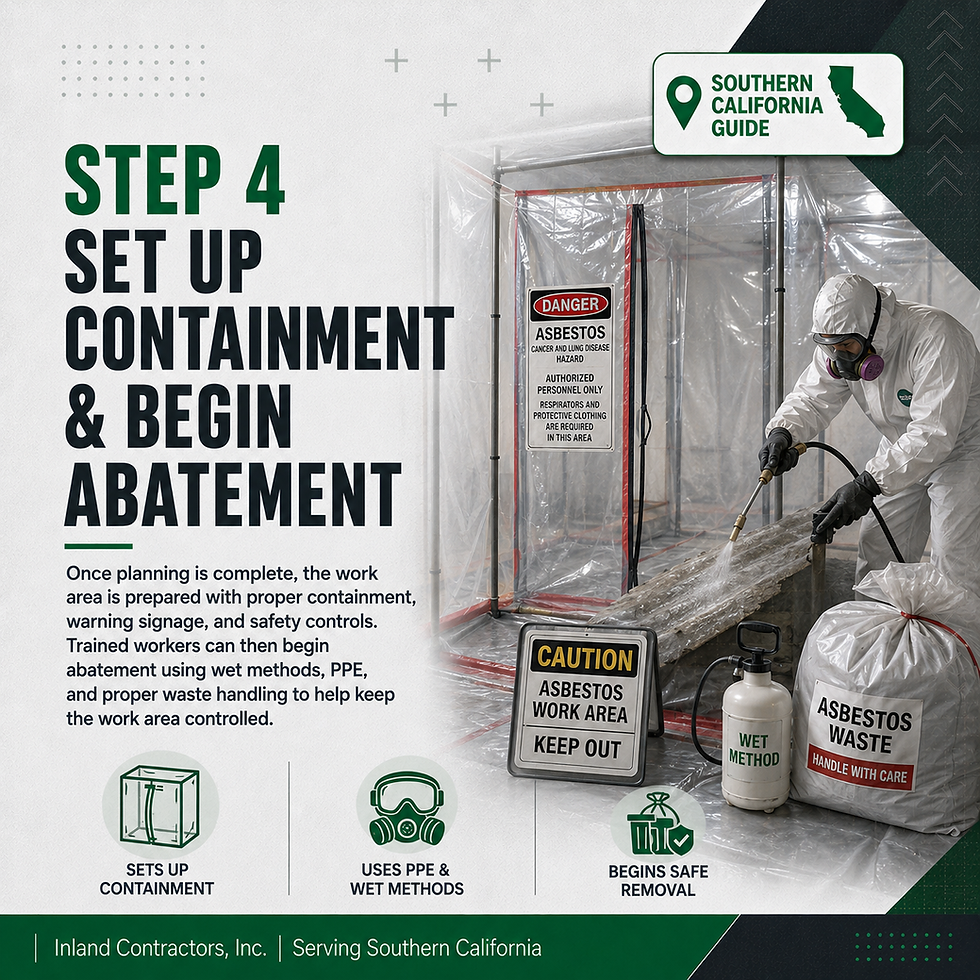
Step 4: Set Up Containment
Before abatement begins, the work area may need to be separated from the surrounding property using containment.
Containment helps create a controlled work area where trained workers can remove asbestos-containing materials while helping reduce the chance of dust, debris, or fibers spreading outside the work zone.
Containment may include:
Plastic sheeting
Floor protection
Wall protection
Critical barriers
Sealed doorways
Sealed vents
Warning signs
Negative air machines
HEPA equipment
Decontamination areas when required
Controlled entry and exit points
Containment is one of the most visible parts of an asbestos project. Customers may see plastic barriers, warning signs, equipment, tape, and sealed work areas before removal begins.
This setup is not just for appearance. It is part of keeping the work area controlled.
What Is a Critical Barrier?
A critical barrier is used to seal openings where dust or fibers could potentially travel.
Critical barriers may be placed over:
HVAC vents
Doorways
Windows
Wall openings
Ceiling openings
Utility penetrations
Return air vents
Electrical openings
Other pathways between work and non-work areas
Critical barriers help support the overall containment system and reduce the chance of asbestos fibers moving into nearby spaces.
What Is Negative Air Pressure?
Negative air pressure is often used during asbestos containment to help control airflow.
In simple terms, negative air pressure helps pull air into the containment area instead of allowing it to escape out. Negative air machines pull air from the containment area and exhaust it through HEPA filtration.
This can help support a more controlled work environment during asbestos abatement.
Negative air pressure is commonly used with containment barriers, sealed openings, PPE, wet methods, HEPA equipment, and decontamination procedures when required.
What Is a 3-Stage Decontamination Unit?
On many regulated asbestos abatement projects, a 3-stage decontamination unit may be used as the controlled entrance and exit of the containment area.
A typical 3-stage decontamination unit includes:
1. Dirty Room
The dirty room is where workers remove potentially contaminated clothing, tools, or equipment before exiting the work area.
2. Decon Shower
The shower area is used to wash away lingering asbestos fibers before workers move into the clean side of the decontamination unit.
3. Clean Room
The clean room is where workers change into clean clothing or prepare to exit the regulated area.
This setup helps support worker safety and helps reduce the chance of contamination being carried outside the containment area.
Step 5: Begin Safe Abatement
Once the report has been reviewed, the scope has been created, the job has been planned, and the containment has been prepared, trained workers can begin abatement.
During asbestos abatement, workers may use:
Proper PPE
Respirators
Wet methods
HEPA equipment
Hand tools
Controlled removal methods
Waste bags or containers
Decontamination procedures when required
Final cleaning procedures
HEPA vacuuming
Wet wiping
Proper waste handling and disposal
The goal is to remove asbestos-containing materials while keeping the work area controlled and following the approved scope of work.
Why Wet Methods Are Used
Wet methods help reduce dust during asbestos removal. By keeping materials wet, workers can help reduce the chance of fibers becoming airborne during removal and handling.
Wet methods may be used during:
Floor tile removal
Mastic removal
Pipe insulation removal
Ceiling texture removal
Drywall removal
Debris cleanup
Waste packaging
Final cleaning
Wet methods are an important part of professional asbestos work and are commonly used with containment, PPE, HEPA equipment, and proper waste procedures.
Why HEPA Equipment Matters
HEPA equipment is used in asbestos abatement because asbestos fibers are extremely small. Standard household vacuums are not designed for asbestos cleanup and should not be used on asbestos debris.
HEPA vacuums and HEPA-filtered equipment help capture fine particles when used properly as part of an approved asbestos cleanup process.
A professional asbestos cleanup may include:
HEPA vacuuming
Wet wiping
Surface cleaning
Waste packaging
Final visual inspection
Third-party clearance when required
Why You Should Not Disturb Suspect Materials
If you suspect asbestos, do not disturb the material.
Avoid:
Sweeping suspect debris
Using a household vacuum
Scraping flooring or mastic
Sanding drywall or texture
Cutting pipe insulation
Removing popcorn ceiling
Demolishing walls without testing
Breaking materials apart
Moving debris without proper controls
Many asbestos problems become worse when someone tries to “clean it up quickly” without proper testing, containment, PPE, wet methods, or HEPA equipment.
If you think asbestos may be present, stop work and get the material tested.
Who Needs to Understand the Asbestos Abatement Process?
This information is helpful for:
Homeowners
General contractors
Property managers
Facility managers
Building owners
School districts
Real estate investors
Insurance professionals
Restoration companies
Tenant improvement contractors
Demolition contractors
Apartment managers
Commercial landlords
Industrial facility operators
If you are planning renovation, demolition, restoration, or repair work in Southern California, understanding the asbestos abatement process can help prevent delays, unsafe disturbance, and unexpected project issues.
Asbestos Abatement in the Inland Empire
The Inland Empire has many older residential, commercial, industrial, and institutional buildings where asbestos-containing materials may still be present.
Inland Contractors provides asbestos abatement support throughout the Inland Empire, including areas such as Riverside County, San Bernardino County, and surrounding communities.
Common Inland Empire asbestos abatement projects may include:
Commercial tenant improvements
Apartment renovations
School facility work
Industrial building projects
Pre-demolition asbestos removal
Flooring and mastic removal
Pipe insulation removal
Damaged asbestos cleanup
Mold remediation and demolition coordination
Lead and asbestos-related environmental work
If you are searching for asbestos removal in the Inland Empire, asbestos abatement contractor near me, asbestos removal Riverside County, asbestos abatement San Bernardino County, or asbestos cleanup Southern California, Inland Contractors can help review your project once the proper testing documentation is available.
Asbestos Abatement in Los Angeles, Orange County, Riverside County, and San Bernardino County
Inland Contractors serves a wide range of Southern California service areas, including:
Los Angeles County
Inland Empire
Orange County
Riverside County
San Bernardino County
Surrounding Southern California areas
Our team works with property owners, contractors, and managers who need professional asbestos abatement based on survey reports, consultant recommendations, and project-specific conditions.
Testing vs. Abatement: What Is the Difference?
One of the most common questions customers ask is the difference between asbestos testing and asbestos abatement.
Testing identifies whether a material contains asbestos.
Abatement removes or controls the asbestos-containing material.
Inland Contractors performs asbestos abatement. We do not perform asbestos testing or write consultant reports. Testing is handled by third-party certified consultants or qualified testing companies.
Once the testing report is complete, our team can review the report and prepare a proposal for the abatement work.
What Customers Should Have Ready Before Requesting an Estimate
To help speed up the proposal process, customers should provide:
The asbestos survey report
Lab results
Photos of the affected areas
Property address
Approximate square footage or quantity
Description of the project
Timeline or deadline
Access instructions
Any consultant recommendations
Whether the building is occupied
Whether the work is connected to renovation, demolition, insurance, or restoration
The more information available, the easier it is to prepare an accurate asbestos abatement proposal.
Final Thoughts
The asbestos abatement process in Southern California starts long before removal begins. A professional project begins with testing, report review, scope development, planning, containment setup, and safety preparation.
These steps help keep the work organized, reduce confusion, and support a safer abatement process.
If you are planning a renovation, demolition, tenant improvement, cleanup, or construction project and suspect asbestos-containing materials may be present, do not disturb the material. Get proper testing first and work with a qualified asbestos abatement contractor.
Inland Contractors, Inc. provides professional asbestos abatement, lead abatement, mold remediation, and demolition services throughout Los Angeles, the Inland Empire, Orange County, Riverside County, San Bernardino County, and surrounding Southern California areas.


Comments